
Products
Our Products

About us
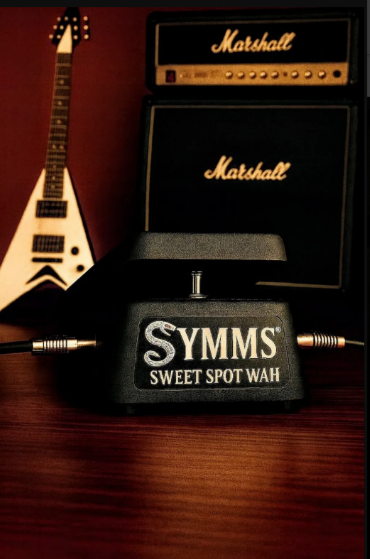
Symms Sweet Spot Wah
The Symms Sweet Spot Wah isn’t another clone, reissue, or “vintage‑inspired” copy. It’s the result of a 15‑year pursuit by DT Symms, a guitarist with more than 45 years of stage, studio, and tone‑crafting experience. Every curve of the sweep, every harmonic peak, and every ounce of feel was shaped by a player who has lived behind a guitar for nearly half a century.
This pedal exists because the classic wah designs never fully delivered the expressive control DT Symms demanded. So he built his own—slowly, relentlessly, and with the kind of ear only decades of playing can develop.
Built for Guitar, Bass, and Keyboards
Most wahs are voiced for guitar alone. This one was intentionally designed to handle:
A Sweep Tuned by a Lifetime Player
Most wah pedals are engineered by circuit designers. This one was engineered by a musician first. DT Symms spent years refining the sweep curve to land in the exact “sweet spot” where vocal‑like expression, harmonic richness, and dynamic response meet. The result is a wah that feels alive under your foot—never harsh, never thin, never muddy.
Harmonic Sweet Spot Technology
The pedal’s namesake comes from its unique ability to lock into the harmonic pocket where the guitar naturally sings. Instead of a single resonant peak, the circuit emphasizes a musical blend of upper mids and presence frequencies that respond to your picking intensity. Dig in and it growls; lighten up and it whispers.
Touch‑Responsive Circuitry
Many wahs flatten your dynamics. The Symms Sweet Spot Wah does the opposite. Its hand‑tuned inductor and custom‑voiced gain stage preserve the natural attack and decay of your playing, making it feel like an extension of your hands—not a filter sitting between you and your amp.
The Story Behind the Pedal
DT Symms began designing the Sweet Spot Wah because he couldn’t find a pedal that matched the expressive control he heard in his head. Classic wahs had pieces of the sound, but none delivered the full range of emotion he wanted—especially across guitar, bass, and keyboards.
So he started experimenting. One circuit became five. Five became twenty. Over the years, he refined the sweep, the taper, the inductor, the gain structure, and the harmonic profile until the pedal finally delivered the sound he’d been chasing since the 1980s.
This isn’t a mass‑produced effect. It’s a hand craft‑built musical instrument born from decades of playing, listening, and refusing to compromise.
It feels like a voice, not a filter
It responds to your touch instead of flattening it
It finds the musical pocket effortlessly
It works across multiple instruments